
22nd Annual Olin Finance Conference at WashU
November 12-13, 2026
WashU Olin Business School and its Wells Fargo Advisors Center for Finance and Accounting Research (WFA CFAR) cordially invite you to attend the 22nd Annual Olin Finance Conference at WashU, November 12-13, 2026.
We look forward to seeing you at the conference!
CONFERENCE COMMITTEE
Armando Gomes (co-chair)
Xing Huang
Brittany Lewis
Asaf Manela (co-chair)
Anjan Thakor
Program
22nd Annual Olin Finance Conference at WashU
Fall 2026
DATE November 12-13, 2026 (US Central Time)
LOCATION Charles F. Knight Center, Throop & Snow Way, St. Louis, MO
Time allocation: 20 minutes for each paper presentation, followed by 15 minutes for the discussion, and 10 minutes for audience participation.
Conference sessions will be held at the Knight Center. Day one will take place in Room 220, and day two will take place in Room 220.
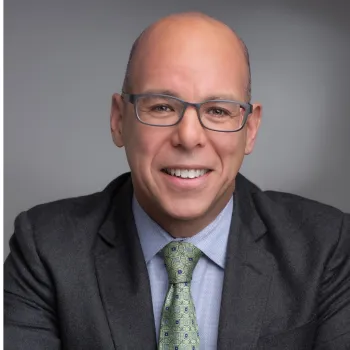
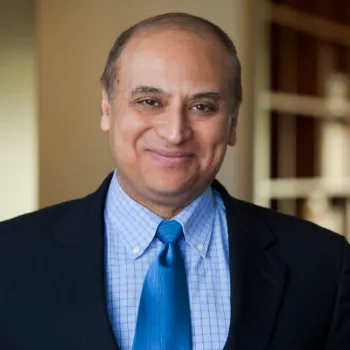


Session 1: Information and Asset Prices

Zhi Da (University of Notre Dame), Liyao Wang (Hong Kong Baptist University) and Ming Zeng
(University of Gothenburg)
Presenter: Zhi Da
Discussant: Nandini Gupta (Indiana University)


Itay Goldstein (University of Pennsylvania), Ye Li (University of Washington) and Chen Wang (University of Notre Dame)
Presenter: Chen Wang
Discussant: Charles Martineau (University of Toronto)


Session 2: Household Risk and Portfolio Choice
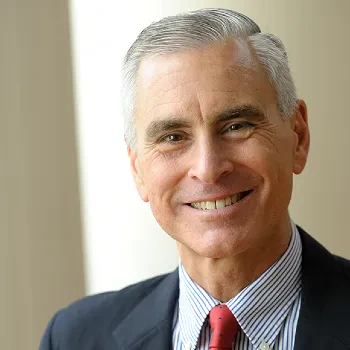
Patrick Adams (University of Pennsylvania)
Presenter: Patrick Adams
Discussant: Michael Boutros (University of Toronto)
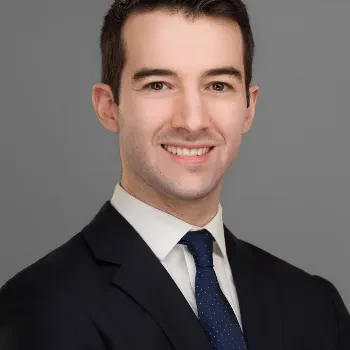

Shan Ge (New York University), Stephanie Johnson (Rice University) and Nitzan Tzur-Ilan (Federal Reserve Bank of Dallas)
Presenter: Shan Ge
Discussant: Cameron Ellis (University of Iowa)

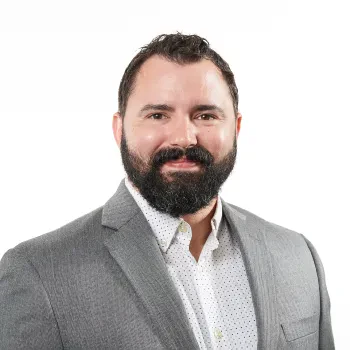
Moderator: Anjan Thakor (Washington University in St. Louis)
Panelists:
- Arnoud Boot (University of Amsterdam)
- Loretta Mester (formerly President, Federal Reserve Bank of Cleveland)
- Charles Calomiris (Columbia Business School)
- João Santos (Federal Reserve Bank of New York)


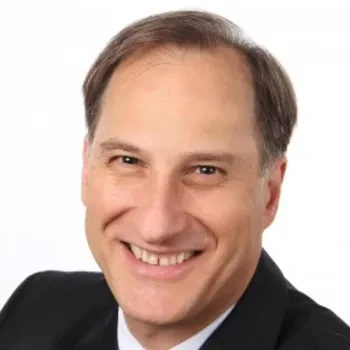

Session 3: Credit Access and Financial Inclusion

Fritz Foley (Harvard University), Agustin Hurtado (University of Maryland) and Alberto Sepulveda (Financial Conduct Authority)
Presenter: Fritz Foley
Discussant: Daniel Carvalho (Indiana University)
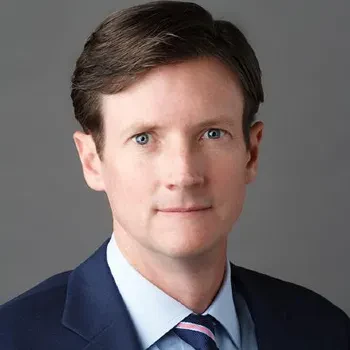
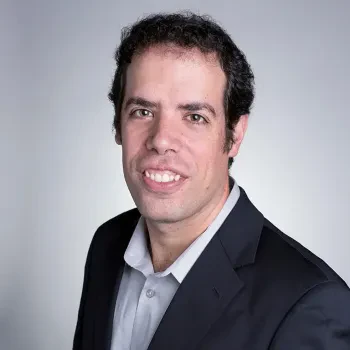
Francesco D'Acunto (Georgetown University), Quentin Dupont (Georgetown University) and Agustin Hurtado (University of Maryland)
Presenter: Agustin Hurtado
Discussant: Martin Kanz (World Bank)

| Presenter | Paper | Institution |
|---|---|---|
| Alyssa Rusonik | Narrative Cacophony in Financial Markets | HEC Paris |
| Anushri Jain | When Innovation Outpaces Policy: Hyperscale Data Centers and the Fiscal Costs of Investment Incentives | Washington University in St. Louis |
| Jared Rutner | Firm Dynamics and Private Credit | UCLA |
| Jiayi Wei | The Real Effects of Digital Payment Anonymity: Evidence from the Crypto Ecosystem | INSEAD |
| Lauren Mostrom | Supply Chain Risk Management: Operational Hedging in Firm Networks | University of Chicago Booth School of Business |
| Minjoo Kim | Credit Access and Retirement Saving | University of Texas at Austin |
| Ran Zhou | Geofinance: Following Sovergn Capital Home | UCLA Anderson |
| Richard Shi | Trade Credit Delay | University of Michigan |
| Seiwoong Hong | How do Peer Firms Respond to Patent Grants? | Ohio State University |
| Xiyu Wang | How Does Becoming "Uninsurable" Affect Perceptions of Disaster Risk? | Washington University in St. Louis |
| Yukun Liu | Sentiment About Others | Baruch College (CUNY) |
Whittemore is located across the street from campus and is a short walk from the Knight Center
Session 4: Asset Markets and Firm Risk
Jules H. van Binsbergen (University of Pennsylvania), Benjamin David and Christian C. Opp (University of Rochester)
Presenter: Christian C. Opp
Discussant: Jessica Li (Harvard Business School)


Tim Liu (University of Utah) and Christos A. Makridis (Arizona State University and Stanford University)
Presenter: Tim Liu
Discussant: Christoph Schiller (Ohio State University)


Session 5: Macro-Finance and Policy
Hans Gersbach (ETH Zurich), Jean-Charles Rochet (Toulouse School of Economics) and Ernst-Ludwig von Thadden (Universität Mannheim)
Presenter: Ernst-Ludwig von Thadden
Discussant: Charles M. Kahn (University of Illinois Urbana-Champaign)


Introduced by: Anjan Thakor (Washington University in St. Louis)

Session 6: AI and Measurement in Finance

Andrea L. Eisfeldt (UCLA), Barney Hartman-Glaser (UCLA), Edward T. Kim (University of Michigan) and Ki Beom Lee (UCLA)
Presenter: Edward Kim
Discussant: Timothy Loughran (University of Notre Dame)


Da Huang (Northeastern University), Avner Kalay (University of Utah and Tel Aviv University) and James Schallheim (University of Utah)
Presenter: Da Huang
Discussant: Alejandro Lopez-Lira (University of Florida)
Papers
Tim Liu and Christos A. Makridis∗
Abstract
Despite the growing importance of cybersecurity, measuring cybersecurity exposures
has proven challenging. Existing methods rely on textual and statistical analysis of disclosures, which require managers to have accurate appraisals of cybersecurity risks and disclose these risks in an unbiased manner. We introduce a novel firm-level measure of cybersecurity exposures that identify network ports accessible from the public internet, sidestepping the need to rely on managerial reporting. Our process replicates “port scans,” a technique cybersecurity adversaries implement to identify vulnerable firms. We find that cybersecurity exposures predict future realized breaches. High cybersecurity exposure stocks underperform other stocks by 0.33% per month. Our findings differ from studies relying on disclosure-based measures of cybersecurity exposures, which find cybersecurity risk to be priced (higher exposures predicting higher returns). Our findings identify network exposures as an economically meaningful signal of the information security control environment and highlight limitations of disclosure-based assessments of cybersecurity risk.
Zhi Da, Liyao Wang, Ming Zeng
Abstract
Post-earnings announcement drift (PEAD) displays presidential cycles: it earns
4.1% per year during Democratic presidencies but its profitability increases significantly to 15.3% during Republican presidencies. The tax component of firm earnings is significantly more volatile during Republican periods, suggesting larger tax policy uncertainty that amplifies information uncertainty and hence investor underreaction. Evidence from analyst forecasts, corporate filings, option implied volatilities and event studies helps to “rule-in” this novel tax channel. In addition, presidential cycles in PEAD are concentrated among firms with high tax policy exposures. The cycles are not driven by time-varying risk aversion or microcap firms.
Information Sharing Regimes and Financial Access∗
Fritz Foley, Agustin Hurtado, Alberto Sepulveda
Abstract
How does the availability of credit information shape lenders’ decisions to provide credit in consumer markets? This paper analyzes a setting in which different kinds of lenders operate under different information sharing regimes. In the Chilean credit card market, bank issuers operate under a public regime, sharing full credit histories while nonbank issuers report only defaults, making non-defaulting borrowers invisible to other lenders. Analysis of a borrower-level panel covering the universe of credit card holders reveals that nonbank issuers disproportionately serve first-time borrowers, start with credit limits roughly one-quarter those of banks, double them within 24 months, but experience higher default and card cancellation rates. These patterns are consistent with nonbank issuers learning by lending and increasing their exposure to borrowers deemed creditworthy, taking advantage of their private information. To identify the effect of information sharing, we exploit a joint venture (JV) that makes the full credit histories of two million previously unobserved borrowers visible to all banks. After the JV, banks increase credit limits to these borrowers by 160,000 pesos, or 5% of the average credit card limit, relative to other nonbank borrowers. The increase is larger for borrowers whose predicted default declines most with the newly available information. The JV lender’s first-time borrowers are less likely to be young, female, and low-income than those at other nonbank issuers. These findings reveal a trade-off: information sharing expands access for incumbent borrowers but may reduce issuers’ incentives to originate credit to new, informationally opaque borrowers, with implications for the optimal design of credit information institutions and policies such as open banking.
Francesco D’Acuntom, Quentin Dupont, Agustin Hurtado
Abstract
We ask whether borrowers’ social preferences may create non-pecuniary repayment incentives (social monitoring). To study this question, we use credit unions as a setting because, unlike banks, they link owner-borrowers through social ties that may generate social monitoring through altruism, social pressure, or both. Comparing lending outcomes at credit unions and banks of similar size, three findings suggest social monitoring is economically meaningful and point to social pressure as the dominant channel. First, credit unions face lower default rates on loans whose defaults are visible to peers (mortgages), but higher default rates on those whose defaults are not visible (credit cards). Second, these di!erences are strongest at one and two-branch institutions, where peers’ default visibility is highest. Third, mortgage default di!erences are strongest for professional bonds and muted for religious bonds, where altruism is likely strongest. Observable risk or contract terms in borrower-level data cannot account for these results.
The Effect of Rising Insurance Premiums on Mortgage Delinquency and Household Relocation *
Shan Ge, Stephanie Johnson, Nitzan Tzur-Ilan
Abstract
Homeowners’ insurance premiums in the U.S. have risen dramatically. Using household level microdata and a novel instrumental variable, we document three main findings. First, consistent with efforts to mitigate the impact of higher premiums, households experiencing larger premium increases are more likely to relocate, and move to areas with lower climate risk and lower insurance costs. Homes experiencing larger premium hikes are more likely to be acquired by investors, who obtain lower premium rates. Second, for households unable to mitigate effectively, higher premiums increase mortgage delinquencies. Third, the relocation effect is stronger among less financially constrained households, who can better afford the upfront costs of moving, while the delinquency effect is concentrated among more constrained households. Our findings reveal how rising insurance costs, increasingly driven by climate change, can threaten household financial resilience, while highlighting an adaptation mechanism through relocation.
Stocks for the Long Run or Liquidity? Tax Data Evidence and Portfolio Choice Implications∗
Patrick Adams, The Wharton School, University of Pennsylvania
Abstract
Do temporary stock price crashes matter for long-term investors? I use over 25 years of U.S. income tax data to characterize the savings behavior and risk exposures of high-income working-age households. Aggregate stock price crashes coincide with persistent declines in wage and private business income for many of these households, who take large drawdowns from their liquid assets – including stocks – in response. I develop a life-cycle model with consumption adjustment frictions to match this observed savings behavior and determine its portfolio choice implications. Investing in stocks is risky when falling income and rigid expenditures may force investors to liquidate their holdings at temporarily-depressed prices, resulting in low optimal portfolio shares. These results challenge the conventional wisdom that the stock market is relatively safe for long-term investors.
How (Not) to Identify Demand Elasticities in Dynamic Asset Markets*
Jules H. van Binsbergen, Benjamin David, Christian C. Opp
Abstract
We evaluate approaches to estimating demand elasticities in dynamic asset markets, both theoretically and empirically. We establish strict necessary conditions that instrumented asset price variation must satisfy for valid identification. Commonly used instruments violate these conditions, yielding estimates that are largely unrelated to true price elasticities and may even have the wrong sign. We derive transparent formulas for the biases that arise when instrumented price shifts persist or build up and propose an approximate bias-correction factor. Our dynamic general-equilibrium analysis characterizes the mapping from supply shock processes to price-shift processes, revealing severe shortcomings of standard multiplier calculations in multi-period settings.
Learning from Prediction Markets: The Transmission of Information and Noise to Traditional Assets
Abstract
Prediction markets are widely promoted as efficient mechanisms for aggregating dispersed information and generating signals for the broader economy. We document information spillover from Polymarket to traditional financial markets during the 2024 U.S. presidential election. Changes in Polymarket-implied probabilities predict next-day returns of “Trump trades” across asset classes, followed by partial reversals, indicating that both information and noise are transmitted. Using the blockchain-based transaction data, we classify Polymarket traders as informed or uninformed at the wallet level and show that the price impact of uninformed trading contributes to the next-day predictability, but, unlike the price impact of informed trading, does not persist and fades over the following days. As the transmitted noise cannot reflect the sequential arrival of fundamental information, it identifies an active crossmarket learning channel through which both information and noise propagate. We further document an “information hangover” effect: recent informed trading amplifies the traditional market’s subsequent reliance on Polymarket signals, which in turn facilitates noise spillovers.
Public Finance and the Balance Sheet of the Private Sector∗
Hans Gersbach, Jean-Charles Rochet, Ernst-Ludwig von Thadden
Abstract
This paper characterizes optimal fiscal policy in a simple growth model with endogenously incomplete financial markets and idiosyncratic production risk. Entrepreneurs cannot issue contingent claims and obtain sub-optimal funding because of informational frictions. Constrained optimal allocations can be decentralized as competitive equilibria if and only if entrepreneurs issue continuously traded shortterm debt and the government issues public debt, enlarging the asset base for the private sector’s precautionary savings. Our set-up yields closed-form expressions for the optimal combination of public debt and taxes, which allows for explicit comparative statics of public and private debt, growth, interest, and the wealth distribution.
Andrea L. Eisfeldt, Barney Hartman-Glaser, Edward T. Kim, Ki Beom Lee
Abstract
We develop a text-based measure of intangible investment intensity derived from 10-K filings, and offer a general methodology for semantic theme scoring (STS). The approach further decomposes disclosure text into knowledge, customer, and organization capital. Knowledge-intensive firms are small, young, and R&D-driven, customer-intensive firms are profitable and commercially oriented, and organization-intensive firms are large incumbents built on operational scale. We calibrate the scores to observed spending and accumulate firm-level intangible capital stocks, which more than triple the explanatory power of a franchise-value benchmark for market-to-book ratios. Firms with more intangible capital also borrow less and hold substantially more cash. Managerial language thus embeds forward-looking signals about intangible investment that accounting data obscure.
Can AI Replace the Peer Reviewer (Yet)?∗
Da Huang, Avner Kalay, James Schallheim
Abstract
We compare reviews of Utah Winter Finance Conference papers from six frontier AI models and the human program committee. AI scores cluster in the middle, missing the exceptional and clearly weak papers on which accept/reject decisions hinge. AI–human per-paper agreement is weak, but matches human– human agreement on the same papers (r ≈ 0.19). Disagreement is idiosyncratic judgment, not error. The right question is who predicts papers’ future impact better. Humans predict citations better in the tails; AI predicts better in the middle, where the precise score has little bearing on program outcomes. AI complements, but cannot replace, human reviewers.
PhD Poster Session










Sponsor/Organizers
Conference sponsored by theWells Fargo Advisors Center for
Finance and Accounting Research at
WashU Olin Business School
Organizers:




Local Hotel Information
Approximately 1.7 miles from the Charles F. Knight Center/Washington University campus.
7730 Bonhomme Avenue, St. Louis, MO 63105. Phone: (314) 863-0400.
Approximately 2 miles from the Charles F. Knight Center/Washington University campus.
Individual reservations can be made online using promo code WAS for WashU corporate rate.
6300 Clayton Road, St. Louis, MO 63117. Phone: (314) 647-7300.
The Ritz-Carlton, Clayton
Approximately 1 mile from the Charles F. Knight Center/Washington University Campus.
Individual reservations can be made online using promo code WAS for WashU corporate rate.
100 Carondelet Plaza, St. Louis, MO 63105. Phone: (314) 863-6300.
Moonrise Hotel
Approximately 1 mile from the Charles F. Knight Center/Washington University Campus.
For reservations: 314-721-1111. Ask for the Washington University rate.
University City Loop 6177 Delmar Blvd, St. Louis, MO 63112. Phone: (314) 721-1111.
AC Hotel St. Louis Central West End
Approximately 2.9 miles from the Charles F. Knight Center/Washington University campus.
Individual reservations can be made online using promo code WAS for WashU corporate rate.
215 York Ave, St. Louis, MO 63108. Phone: (314) 887-4849.