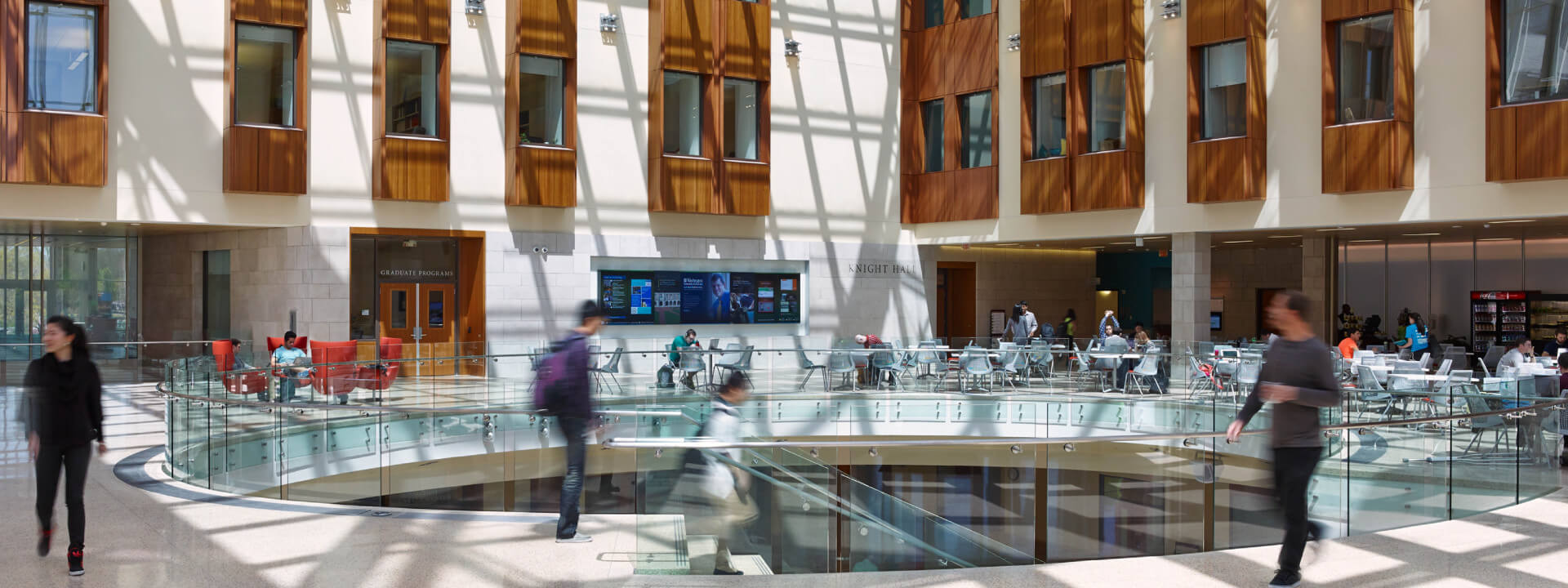
WashU Olin Business School and its Wells Fargo Advisors Center for Finance and Accounting Research (WFA-CFAR) cordially invite you to attend the 2nd Annual Conference on the Economics and Finance of Healthcare and Medicine at WashU, February 23, 2026. The conference will highlight research at the intersection of healthcare/medicine and economics/finance.
We look forward to seeing you at the conference!
Presenters




Discussants





Session Chairs
Papers
Driving a Bargain: Negotiation Skill and Price Dispersion
Kristine Hankins, Tong Liu, Denis Sosyura
We show that individual negotiation skills affect equilibrium prices in societally important contracting. We develop a novel measure of managers’ negotiation skills from private vehicle transactions and link it to proprietary data on negotiated hospital prices. Higher-skilled managers negotiate better prices, suggesting negotiation skill is a portable asset. Management turnovers and shocks to insurer bargaining positions support this interpretation. We estimate a model to quantify the role of individual skill and find heterogeneity in negotiation skills explains 37% of the price dispersion attributed to differences in hospitals’ bargaining power. Overall, human capital is an important determinant of market-wide price dispersion.
Disclosure Control as a Real Option: Contractual Governance in Clinical Trials
Yue Chen, Sean Wang, Yue Zhang
Clinical trial publications are the primary channel through which drug-efficacy evidence reaches physicians, shaping prescribing decisions and patient outcomes. To enhance credibility, pharmaceutical firms outsource trials to independent investigators, yet 72% of these trials include embargo clauses that grant sponsors manuscript review and publication-delay rights. We frame the embargo as a real option: firms incur an upfront reputational cost to retain discretion over disclosure when results are unfavorable. Linking over 60,000 U.S. clinical trials to peer-reviewed publications, we show embargo adoption concentrates where option value is highest—when endpoints are more flexible, specification search is more feasible, and adverse results would trigger larger market-value losses. Our core finding concerns spin: among trials with marginally insignificant primary endpoints, embargoed studies exhibit 18 percentage points more positive abstract spin than non-embargoed studies, offsetting 87% of the tone gap between trials with significant and insignificant endpoints. This effect disappears when results are clearly insignificant and cannot be credibly reframed. We document stratified sophistication among information intermediaries: top-tier journals and the FDA penalize embargo-enabled spin, whereas lower-tier journals and capital markets do not, consistent with limited processing capacity among generalist intermediaries. Manipulated publications are thus redirected rather than eliminated, entering the medical literature that informs prescribing and patient care. Our findings reveal a limit to outsourcing for credibility: contractual governance allows sponsors to reassert influence over ostensibly independent scientific disclosure.
Hidden Medical Debt and Consumer Access to Credit
Elena Loutskina, Joonsung Won
Credit bureaus face significant frictions in collecting consumer medical debt liabilities data, which spurred an intense ongoing policy debate. Leveraging novel healthcare costs proxies based on Medicare spending data, we evaluate the impact of hidden medical liabilities on consumer credit scoring and access to credit. We document that the traditional creditworthiness measures underestimate the ex-post default for consumers residing in higher healthcare costs markets. Consumers in high-healthcare-cost CBSAs are 37.6% more likely to default than those in low-healthcare-cost CBSAs. These effects are more pronounced among higher risk consumers, those with low credit scores and high DTIs. Lenders internalize these biases and impose higher mortgage rejection rates in high-healthcare-cost CBSAs, particularly for riskier applicants. These effects intensify following a policy shift that partially removed medical liabilities from credit reports without affecting consumer balance sheets. Our findings suggest that limiting the flow of medical liabilities data undermines the predictive accuracy of standard credit metrics, impairs the information value of credit bureau outputs, and leads to less efficient credit allocation.
How Do Debt Collection Restrictions Affect Hospitals and Patients?
Christine Zhuowei Huang, Amit Kumar, Lynn Linghuan Wang
Tighter regulations on consumer debt collectors, although intended to curb predatory practices, may disrupt industries to which such debts are owed. Using a paired-county stacked difference-in-differences design, we show that these regulations adversely affect hospitals. While hospital patient volume remains unchanged, their accounts receivable, liabilities, and profitability deteriorate, with stronger effects for ex-ante higher financial liability and debt collector density.
Consequently, hospitals reduce capacity, employment, and care quality, and steer patients to high-cost procedures. Additionally, non-profit hospitals reduce charity care for uninsured patients. Overall, ignoring spillovers of consumer financial protection laws on non-financial sectors may overstate their benefits.
Financing Charity: Evidence from U.S. Hospitals
Katharina Lewellen, Giorgo Sertsios, Jiadi Xu
U.S. hospitals are expected to provide charity care—services delivered at below-cost prices—though the strength of this commitment and their funding sources vary across organizational forms. We study how the different forms respond to persistent increases in local demand for uncompensated care induced by immigration flows. Using historical immigrant enclaves to instrument for local immigration, we find that a 1% increase in immigration (relative to a county’s initial population) leads to a 2.17% decline in hospital bed capacity over ten years, driven primarily by nonprofit exits through closures or mergers. Surviving nonprofits experience declining profit margins and rising uncompensated care; they respond by reducing capital investments rather than raising external funds. Government hospitals absorb comparable operating losses yet avoid exit and expand market shares while for-profit hospitals remain largely unaffected. Our findings suggest that nonprofit hospitals face tight financing and operating constraints that limit their ability to absorb profitability shocks and sustain mission-driven commitments. More broadly, the results highlight how sustained increases in demand for charitable services reshape capital allocation and ownership structure in the healthcare sector.
The Unsecured Consequence: Youth Mental Health and Financial Distress
Atlas Wu
This paper investigates the long-term impact of youth mental health on financial distress using nationally representative survey data. I find that individuals with a higher propensity for youth mental health problems are significantly more likely to experience distress related to unsecured debt, but not secured debt. To mitigate potential endogeneity concerns, I instrument youth mental health propensity with prenatal exposure to alcohol or cigarettes. The results further indicate that the non-Hispanic, non-Black population is particularly susceptible to the adverse effects of youth mental health issues on unsecured debt distress. Differences in borrowing behavior, credit access, perceived costs of default, financial planning, and noncognitive abilities help explain these heterogeneous effects. Overall, the findings underscore the importance of policies aimed at improving youth mental health as a strategy for mitigating financial distress in adulthood.
Tunneling and Hidden Profits in Health Care
Ashvin Gandhi, Andrew Olenski
This study examines whether healthcare providers tunnel profits and assets to commonly-owned related parties by making inflated payments for their goods and services. Such practices allow providers to understate their profitability—which may encourage regulators to increase reimbursements and relax quality standards—and shield assets from malpractice liability. Using uniquely detailed nursing home financial data, we find evidence of widespread tunneling to related party real estate and management companies. Our estimates suggest that 68% of nursing home profits are tunneled to related parties and that accounting for tunneled profits and assets raises the implied typical investment IRR from 4.83% to 13.11%.
The (going) public option: Equity market financing in the hospital industry
Cyrus Aghamolla, Jash Jain, Richard T. Thakor
We examine the role of public equity financing in the hospital sector. We find that the transition to public equity markets by hospital systems leads to dramatic and persistent increases in profitability, net income, and net patient revenues for the system’s individual hospitals following the initial public offering. This increase in revenues is accompanied by expansions in both capacity and equipment, allowing hospitals to accommodate more patients and increase service offerings. The results additionally show that recently public systems use the raised capital to accelerate acquisitions of hospitals located in close geographic proximity to hospitals already owned by the system. The expanded network of the system can help to explain the large observed increase in profits after going public—greater regional market power enhances the system’s bargaining posture with insurers, allowing them to demand higher reimbursement rates, thereby driving up prices for hospital services. These results improve our understanding of how access to public equity markets influences the healthcare landscape.
Program
2nd Annual Conference on the Economics and Finance of Healthcare and Medicine
DATE February 23, 2026 (US Central Time)
LOCATION Charles F. Knight Center, Throop & Snow Way, St. Louis, MO
Time allocation: 20 minutes for each paper presentation, followed by 15 minutes for the discussion, and 10 minutes for audience participation.
All conference sessions will be held in Knight Center, room 220.
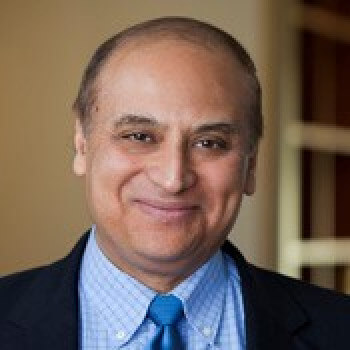
Anjan Thakor and Bart Hamilton, WashU

Dean Mike Mazzeo, WashU
Session Chair: Ryan McDevitt, WashU
Elena Loutskina (University of Virginia), Joonsung Francis Won (University of Virginia)
Presenter: Joonsung Francis Won
Discussant: David Sovich, University of Kentucky
Audience Q&A

Christine Zhuowei Huang (UT Dallas), Amit Kumar (Singapore Management University), Lynn Linghuan Wang (National University of Singapore)
Presenter: Amit Kumar
Discussant: Ankit Kalda, Indiana University
Audience Q&A
Session Chair: Patrick Aguilar, WashU
Katharina Lewellen (Dartmouth), Giorgo Sertsios (University of Wisconsin-Milwaukee), Jiadi Xu (University of Wisconsin-Milwaukee)
Presenter: Giorgo Sertsios
Discussant: Meghan Esson, University of Iowa
Audience Q&A
Ashvin Gandhi (UCLA Anderson), Andrew Olenski (Lehigh University)
Presenter: Ashvin Gandhi
Discussant: Gaurab Aryal, Boston University
Audience Q&A

Session Chair: Brett Green, WashU
Kristine Hankins (University of Kentucky), Tong Liu (MIT), Denis Sosyura (Arizona State University)
Presenter: Tong Liu
Discussant: Jash Jain, Indian School of Business
Audience Q&A
Cyrus Aghamolla (Rice University), Jash Jain (Indian School of Business), Richard Thakor (University of Minnesota)
Presenter: Richard Thakor
Discussant: Riley League, University of Illinois Urbana-Champaign
Audience Q&A
Session Chair: Stephen Ryan, WashU
Yue Chen (CUNY), Sean Wang (Southern Methodist University), Yue Zhang (CUNY)
Presenter: Sean Wang
Discussant: Xuelin Li, Columbia University
Audience Q&A
Atlas Wu (Cornell University)
Presenter: Atlas Wu
Discussant: Cecilia Diaz Campo, WashU
Audience Q&A
Anjan Thakor and Bart Hamilton, WashU
Conference Sponsored By
Wells Fargo Advisors Center for
Finance and Accounting Research
ORGANIZERS::

Local Hotel Information
Approximately 1.7 miles from the Charles F. Knight Center/Washington University campus.
7730 Bonhomme Avenue, St. Louis, MO 63105. Phone: (314) 863-0400.
Approximately 2 miles from the Charles F. Knight Center/Washington University campus.
Individual reservations can be made online using promo code WAS for WashU corporate rate.
6300 Clayton Road, St. Louis, MO 63117. Phone: (314) 647-7300.
The Ritz-Carlton, Clayton
Approximately 1 mile from the Charles F. Knight Center/Washington University Campus.
Individual reservations can be made online using promo code WAS for WashU corporate rate.
100 Carondelet Plaza, St. Louis, MO 63105. Phone: (314) 863-6300.
Moonrise Hotel
Approximately 1 mile from the Charles F. Knight Center/Washington University Campus.
For reservations: 314-721-1111. Ask for the Washington University rate.
University City Loop 6177 Delmar Blvd, St. Louis, MO 63112. Phone: (314) 721-1111.
AC Hotel St. Louis Central West End
Approximately 2.9 miles from the Charles F. Knight Center/Washington University campus.
Individual reservations can be made online using promo code WAS for WashU corporate rate.
215 York Ave, St. Louis, MO 63108. Phone: (314) 887-4849.
Contact
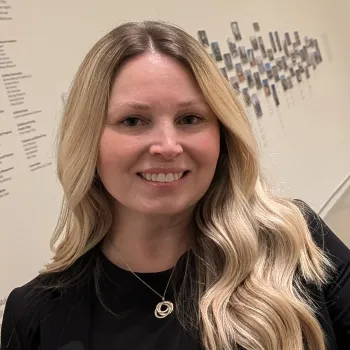
Kristen Jones
Operations Manager
Wells Fargo Advisors Center for Finance & Accounting Research
WashU Olin Business School
Email: kristen.jones@wustl.edu