CONFERENCE ON THE ECONOMICS AND FINANCE OF HEALTHCARE AND MEDICINE

April 25, 2025


Sponsored by:

The Wells Fargo Advisors Center for Finance and Accounting Research 

WashU Olin Business School and its Wells Fargo Advisors Center for Finance and Accounting Research (WFA-CFAR) cordially invite you to attend the Conference on the Economics and Finance of Healthcare and Medicine at WashU, April 25, 2025. The conference will highlight research at the intersection of healthcare/medicine and economics/finance.  

We look forward to seeing you at the conference!

CONFERENCE COMMITTEE

Barton Hamilton

Anjan Thakor


Details

April 25, 2025
Olin Business School at Washington University in Saint Louis

Charles F. Knight Executive Education & Conference Center, Snow Way Drive, St. Louis, MO, USA

Snow Way Drive
63130 St. Louis MO
United States

Keynote Speaker

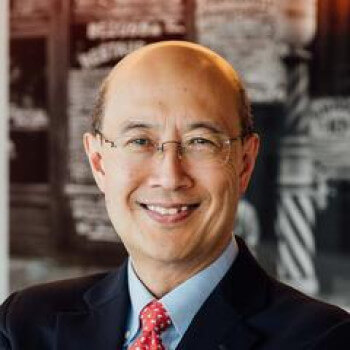
Andrew Lo

Charles E. and Susan T. Harris Professor of Finance
MIT Sloan School of Management
  • alo.mit.edu
  • Andrew Lo

    Professor Lo's current research spans five areas: evolutionary models of investor behavior and adaptive markets, systemic risk and financial regulation, quantitative models of financial markets, financial applications of machine-learning techniques and secure multi-party computation, and healthcare finance.  Recent projects include: deriving risk aversion, loss aversion, probability matching, and other behaviors as emergent properties of evolution in stochastic environments; quantifying the financial consequences of ESG and other forms of impact investing on investment performance; proposing new funding models for fusion energy; and developing new statistical tools for predicting clinical trial outcomes, incorporating patient preferences into the drug approval process, and accelerating biomedical innovation via novel financing and business structures.  He is currently an advisor to the Journal of Investment Management and the Journal of Portfolio Management.

    Read more

Presenters

Gaurab Aryal

Associate Professor, Department of Economics
Boston University
  • sites.google.com
  • Gaurab Aryal

    Vauling Pharmaceutical Innovation

    Gaurab Aryal, Federico Ciliberto, Leland E. Farmer, Ekaterina Khmelnitskaya

    We propose a methodology to estimate the market value of pharmaceutical drugs. Our approach combines an event study with a model of discounted cash flows and uses stock market responses to drug development announcements to infer the values. We estimate that, on average, a successful drug is valued at $1.62 billion, and its value at the discovery stage is $64.3 million, with substantial heterogeneity across major diseases. Leveraging these estimates, we also determine the average drug development costs at various stages. Furthermore, we explore applying our estimates to design policies that support drug development through drug buyouts and cost-sharing agreements.

    Read more

Joonsung (Francis) Won

Postdoctoral Research Associate, Mayo Center for Asset Management
University of Virginia
  • www.darden.virginia.edu
  • Joonsung (Francis) Won

    Hidden Medical Debt and Consumer Access to Credit

    Elena Loutskina, Joonsung Won

    Credit bureaus face significant frictions in collecting consumer medical debt liabilities data, which spurred an intense ongoing policy debate. Leveraging novel healthcare costs proxies based on Medicare spending data, we evaluate the impact of hidden medical liabilities on consumer credit scoring and access to credit. We document that the traditional creditworthiness measures underestimate the ex-post default for consumers residing in higher healthcare costs markets. Consumers in high-healthcare-cost CBSAs are 37.6% more likely to default than those in low-healthcare-cost CBSAs. These effects are more pronounced among higher risk consumers, those with low credit scores and high DTIs. Lenders internalize these biases and impose higher mortgage rejection rates in high-healthcare-cost CBSAs, particularly for riskier applicants. These effects intensify following a policy shift that partially removed medical liabilities from credit reports without affecting consumer balance sheets. Our findings suggest that limiting the flow of medical liabilities data undermines the predictive accuracy of standard credit metrics, impairs the information value of credit bureau outputs, and leads to less efficient credit allocation.


    Read more

Meghan Esson

Aegon Transamerica RMI Fellowship and Assistant Professor
University of Iowa
  • tippie.uiowa.edu
  • Meghan Esson

    Firm Investment in the Face of Tail Risk: Evidence From Hospitals

    Meghan Esson and Jingshu Luo

    We examine how organizations navigate investment decisions when confronted with tail risk -- the small possibility of extreme financial loss. We focus on hospital investments in trauma centers faced with medical malpractice risk. We focus on hospitals for three reasons: first, medical malpractice insurance inherently leaves hospitals exposed to substantial tail risk; second, the consequential financial stakes of medical liability for hospitals are quite large; and third, while trauma centers are financially beneficial, they are also exceptionally susceptible to tail risk given the critical nature of their services. For identification, we exploit the staggered adoption of caps on non-economic damages across states from 1991 to 2011, treating this as a quasi-random modulation of tail risk. These caps impose a ceiling on potential awards in malpractice lawsuits, thereby attenuating the tail risk. Employing a staggered synthetic control methodology, we find a 25% increase in the likelihood that a hospital has a trauma center following the reduction of tail risk. This effect is predominantly driven by non-profit hospitals and new investments (i.e., trauma center openings) rather than disinvestment (i.e., decrease in trauma center closures), indicating a one-sided response to decreased tail risk. We demonstrate that this increased presence of trauma centers is associated with a 3% reduction in traffic fatalities, with more pronounced effects in areas prone to mass casualty incidents. The timing of health improvements aligns closely with the increase in trauma centers, suggesting a direct link between hospital investment decisions and improved public health outcomes.

    Read more

Amit Kumar

Assistant Professor of Finance
Lee Kong Chian School of Business, Singapore Management University
  • www.amitkmr.com
  • Amit Kumar

    How Do Debt Collection Restrictions Affect Hospitals and Patients?

    Christine Zhuowei Huang, Amit Kumar, Lynn Linghuan Wang

    Tighter regulations on consumer debt collectors, although intended to curb predatory practices, may disrupt industries to which such debts are owed. Using a paired-county stacked difference-in-differences design, we show that these regulations adversely affect hospitals. While hospital patient volume remains unchanged, their accounts receivable, liabilities, and profitability deteriorate, with stronger effects for ex-ante higher financial liability and debt collector density. Consequently, hospitals reduce capacity, employment, and care quality, and steer patients to high-cost procedures. Additionally, non-profit hospitals reduce charity care for uninsured patients. Overall, ignoring spillovers of consumer financial protection laws on non-financial sectors may overstate their benefits.

    Read more

Tong Liu

Judy C. Lewent (1972) and Mark Shapiro Career Development Assistant Professor of Finance
MIT Sloan School of Management
  • mitsloan.mit.edu
  • Tong Liu

    Driving a Bargain: Negotiation Skill and Price Dispersion

    Kristine Hankins, Tong Liu, Denis Sosyura

    We show that individual negotiation skills affect equilibrium prices in societally important contracting. We develop a novel measure of managers’ negotiation skills from private vehicle transactions and link it to proprietary data on negotiated hospital prices. Higher-skilled managers negotiate better prices, suggesting negotiation skill is a portable asset. Management turnovers and shocks to insurer bargaining positions support this interpretation. We estimate a model to quantify the role of individual skill and find heterogeneity in negotiation skills explains 37% of the price dispersion attributed to differences in hospitals’ bargaining power. Overall, human capital is an important determinant of market-wide price dispersion.

    Read more

Ashvin Gandhi

Assistant Professor
UCLA Anderson School of Management
  • www.anderson.ucla.edu
  • Ashvin Gandhi

    Tunneling and Hidden Profits in Health Care

    Ashvin Gandhi, Andrew Olenski

    This study examines whether healthcare providers tunnel profits and assets to commonlyowned related parties by making inflated payments for their goods and services. Such practices allow providers to understate their profitability—which may encourage regulators to increase reimbursements and relax quality standards—and shield assets from malpractice liability. Using uniquely detailed nursing home financial data, we find evidence of widespread tunneling to related-party real estate and management companies. Our estimates suggest that 68% of nursing home profits are tunneled to related parties and that accounting for tunneled profits and assets raises the implied typical investment IRR from 4.83% to 13.11%.

    Read more

Richard Thakor

Associate Professor, Finance
University of Minnesota
  • carlsonschool.umn.edu
  • Richard Thakor

    The (going) public option: Equity market financing in the hospital industry

    Cyrus Aghamolla, Jash Jain, Richard T. Thakor

    We examine the role of public equity financing in the hospital sector. We find that the transition to public equity markets by hospital systems leads to dramatic and persistent increases in profitability, net income, and net patient revenues for the system’s individual hospitals following the initial public offering. This increase in revenues is accompanied by expansions in both capacity and equipment, allowing hospitals to accommodate
    more patients and increase service offerings. The results additionally show that recently public systems use the raised capital to accelerate acquisitions of hospitals located in close geographic proximity to hospitals already owned by the system. The expanded network of the system can help to explain the large observed increase in profits after going public—greater regional market power enhances the system’s bargaining posture with insurers, allowing them to demand higher reimbursement rates, thereby driving up prices for hospital services. These results improve our understanding of how access to public equity markets influences the healthcare landscape.

    Read more

Giorgo Sertsios

Sheldon B. Lubar Associate Professor of Finance
University of Wisconsin Milwaukee
  • uwm.edu
  • Giorgo Sertsios

    Financing Charity: Evidence from U.S. Hospitals

    Katharina Lewellen, Giorgo Sertsios, Jiadi Xu

    U.S. hospitals are expected to provide charity care—services delivered at below-cost prices—though the strength of this commitment and their funding sources vary across organizational forms. We study how the different forms respond to persistent increases in local demand for uncompensated care induced by immigration flows. Using historical immigrant enclaves to instrument for local immigration, we find that a 1% increase in immigration (relative to a county’s initial population) leads to a 2.17% decline in hospital bed capacity over ten years, driven primarily by nonprofit exits through closures or mergers. Surviving nonprofits experience declining profit margins and rising uncompensated care; they respond by reducing capital investments rather than raising external funds. Government hospitals absorb comparable operating losses yet avoid exit and expand market shares while for-profit hospitals remain largely unaffected. Our findings suggest that nonprofit hospitals face tight financing and operating constraints that limit their ability to absorb profitability shocks and sustain mission-driven commitments. More broadly, the results highlight how sustained increases in demand for charitable services reshape capital allocation and ownership structure in the healthcare sector.

    Read more

Discussants

Cecilia Diaz-Campo

Assistant Professor, Economics
WashU Olin Business

David Sovich

Assistant Professor, Ashland Oil Fellow, Phillip Morris Professorship in Business
Gatton College of Business and Economics, University of Kentucky

Ankit Kalda

Assistant Professor of Finance and Rifkin Faculty Fellow
Kelley School of Business, Indiana University

Riley League

Assistant Professor of Finance
Gies College of Business, University of Illinois Urbana-Champaign

Meghan Esson

Aegon Transamerica RMI Fellowship and Assistant Professor
Tippie College of Business, University of Iowa

Jash Jain

Assistant Professor of Finance
Indian School of Business (ISB)

Xuelin Li

Assistant Professor of Business, Finance Division
Columbia Business School, Columbia University

Gaurab Aryal

Associate Professor, Department of Economics
Boston University

Session Chairs

Patrick Aguilar

Professor of Practice of Organizational Behavior and Managing Director of Health
WashU Olin Business

Ryan McDevitt

Professor of Economics
WashU Olin Business and WashU Public Health

Brett Green

Professor of Finance
WashU Olin Business

Stephen Ryan

Myron Northrop Professor of Economics and Senior Associate Dean of Doctoral Programs
WashU Olin Business

Papers

Childhood Mental Health and Long-run Financial Outcomes

Dragana Cvijanovic, Moritz Wiedemann, Atlas Wu

We investigate the relationship between childhood mental health conditions and financial outcomes later in life. We find that individuals with childhood mental health conditions are significantly less likely to hold any assets, accumulate fewer total assets both unconditionally and conditionally on asset ownership, and are less likely to be homeowners over the life cycle. They also tend to accumulate more debt, and in particular more non-mortgage debt. These results are largely driven by white and male demographic groups. Financial literacy mitigates most of these effects. Childhood mental health is also linked to a lower likelihood of overconfidence, shorter life span expectancy and financial planning horizons, more pessimistic economic outlook, and reduced cognitive abilities, all of which may jointly explain the observed differences in financial outcomes.

Competition and Fraud in Healthcare

Ryan McDevitt

Corporate Behavior When Running the Firm for Stakeholders: Evidence from Hospitals

Christoph Herpfer, Jianzhang Lin, Gonzalo Maturana

We study how stakeholder orientation impacts firm management and performance. We exploit state-level law changes governing the conversion of hospitals from nonprofit to for-profit and find that for-profit orientation reduces hospital spending on emergency rooms and Medicaid patients,while increasing focus on revenue and affecting investment decisions. Consistent with spillovers, nonprofit hospitals located near converting hospitals experience increased emergency room visits and expenditures. We investigate governance channels that align corporate behavior with stake-holders and find that converted for-profit hospitals adjust their boards by replacing MDs with MBAs, and that the tax code is a major source of governance for nonprofits.

Firm Investment in the Face of Tail Risk: Evidence From Hospitals

Meghan Esson and Jingshu Luo

We examine how organizations navigate investment decisions when confronted with tail risk -- the small possibility of extreme financial loss. We focus on hospital investments in trauma centers faced with medical malpractice risk. We focus on hospitals for three reasons: first, medical malpractice insurance inherently leaves hospitals exposed to substantial tail risk; second, the consequential financial stakes of medical liability for hospitals are quite large; and third, while trauma centers are financially beneficial, they are also exceptionally susceptible to tail risk given the critical nature of their services. For identification, we exploit the staggered adoption of caps on non-economic damages across states from 1991 to 2011, treating this as a quasi-random modulation of tail risk. These caps impose a ceiling on potential awards in malpractice lawsuits, thereby attenuating the tail risk. Employing a staggered synthetic control methodology, we find a 25% increase in the likelihood that a hospital has a trauma center following the reduction of tail risk. This effect is predominantly driven by non-profit hospitals and new investments (i.e., trauma center openings) rather than disinvestment (i.e., decrease in trauma center closures), indicating a one-sided response to decreased tail risk. We demonstrate that this increased presence of trauma centers is associated with a 3% reduction in traffic fatalities, with more pronounced effects in areas prone to mass casualty incidents. The timing of health improvements aligns closely with the increase in trauma centers, suggesting a direct link between hospital investment decisions and improved public health outcomes.

On the Economic Infeasibility of Personalized Medicine, and a Solution

Marina Chiara Garassino, Kunel Odunsi, Marciano Siniscalchi, Pietro Veronesi

Technological advances and genomic sequencing opened the road to personalized medicine: specialized therapies targeted to patients displaying specific
molecular alterations. For instance, targeted therapies are now available for 50% of lung cancer patients—with some alterations affecting less than 1% of patients—
greatly increasing life expectancy. In an investment model of drug development, we show that current institutions mandating experimentation and approval of individual
therapies eventually disincentivize investments in personalized medicine as researchers identify increasingly rare alterations. Recent AI-based technologies,
such as AlphaFold3, make personalized medicine viable when regulatory approval regards the process for drug discovery rather than individual therapies.

Overbilling and Killing? An Examination of the Skilled Nursing Industry

John M. Griffin and Alex Priest

Skilled Nursing Facility (SNF) systems that provided excess rehab therapy just above revenue thresholds quickly begin upcoding previously unidentified comorbidities under the new PDPM billing regime. Patients at these opportunistic systems develop more than 50% greater preventable conditions and have twice as many verified reviews indicating abuse. Opportunistic systems mask adverse outcomes through underreporting to CMS. Instrumental variable estimates indicate that opportunistic SNF systems are responsible for an additional 35,000 hospitalizations and 30,000 deaths since PDPM was enacted, while overbilling Medicare $4.3 billion. Opportunistic SNF systems are spreading with more than 2.5 times the acquisition rate of accurate billing systems.

Valuing Pharmaceutical Innovation

Gaurab Aryal, Federico Ciliberto, Leland E. Farmer, Ekaterina Khmelnitskaya

We propose a methodology to estimate the market value of pharmaceutical drugs. Our approach combines an event study with a model of discounted cash flows and uses stock market responses to drug development announcements to infer the values. We estimate that, on average, a successful drug is valued at $1.62 billion, and its value at the discovery stage is $64.3 million, with substantial heterogeneity across major diseases. Leveraging these estimates, we also determine the average drug development costs at various stages. Furthermore, we explore applying our estimates to design policies that support drug development through drug buyouts and cost-sharing agreements.

When Private Equity Comes to Town: The Local Economic Consequences of Rising Healthcare Costs

Cyrus Aghamolla, Jash Jain, Richard T. Thakor

We examine the effect of increased healthcare costs on local economic conditions. We use private equity buyouts of hospital systems as a shock to the healthcare costs faced by firms in affected areas. We provide evidence that private equity buyouts of hospital systems result in higher healthcare insurance premiums paid by firms, and such rises in premiums lead to higher business bankruptcies, an increase in business loan volume, slower employment and establishment growth, and reduced innovative output. The effects are more pronounced in areas with less competitive hospital markets, higher labor intensity, and fewer insurers providing coverage.

 

Local Hotel Information

Le Méridien St. Louis, Clayton 

Approximately 1.7 miles from the Charles F. Knight Center/Washington University campus.

7730 Bonhomme Avenue, St. Louis, MO 63105.  Phone: (314) 863-0400

The Chesire
Approximately 1.9 miles from the Charles F. Knight Center/Washington University Campus. 

6300 Clayton Road, St. Louis, MO 63117. Phone: (314) 647-7300; Email: cheshire@cheshirestl.com 

Residence Inn, Clayton 

Approximately 2.2 miles from the Charles F. Knight Center/Washington University campus.

8125 Forsyth Blvd, Clayton, MO 63105.  Phone: (314) 639-9030

The Ritz-Carlton, Clayton
Approximately 1 mile from the Charles F. Knight Center/Washington University Campus. 

100 Carondelet Plaza, St. Louis, MO 63105. Phone: (314) 863-6300

AC Hotel St. Louis, Central West End 

Approximately 2.9 miles from the Charles F. Knight Center/Washington University campus.

215 York Ave, St. Louis, MO 63108. Phone: (314) 887-4849 

Contact

Kristen Jones
Operations Manager

Wells Fargo Advisors Center for Finance & Accounting Research
WashU Olin Business 

Email: kristen.jones@wustl.edu 

Sponsors

Conference sponsored by the Wells Fargo Advisors Center for

Finance and Accounting Research at

WashU Olin Business School

ORGANIZERS:


Barton Hamilton

Robert Brookings Smith Distinguished Professor of Entrepreneurship
WashU Olin Business School
Barton Hamilton

Anjan Thakor

John E. Simon Professor of Finance, and Director of the WFA Center for Finance and Accounting Research
WashU Olin Business School
Anjan Thakor

Other events